Image

Displaying 1 - 10 of 1688
This mixed-methods systematic review reports findings from 73 studies on interventions to support children and young people to return home safely after a period in care in the UK. Overall, reunification interventions had a small but meaningful positive effect on outcomes associated with successful reunification.
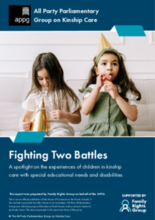
This report, from the UK All Party Parliamentary Group (APPG) on Kinship Care, shines a spotlight on the experiences of children with special educational needs and disabilities (SEND) who are raised by kinship carers. The report reveals that both the child welfare system and the SEND system were not designed with kinship families in mind.
This systematic scoping review examines programmes that integrate parenting support and financial well-being support for families with children aged 0–19 in the UK. It explores programme models, evaluation approaches, and evidence on their effectiveness in addressing child and family outcomes.
This article examines concerns about the treatment of children in care in Ireland and argues that the State has failed to fully uphold the constitutional rights of children placed in alternative care.
The Guardian article is a deeply personal account of an adoptee who reconnects with his birth parents decades after being forcibly separated from his mother at birth in 1970s Britain, a time when social stigma and institutional pressures led many unmarried women to relinquish their children.
Reunification can be a pivotal transition for children, young people, and their families. A return home is not a single event: it is a process that requires careful assessment, purposeful planning, shared decision-making, and sustained support before, during, and after a child returns home. This Practice Guide focuses on reunification.
This report examines the characteristics, circumstances, and support needs of children and families involved in Special Guardianship Orders (SGOs) project in Wales. It aims to strengthen understanding of factors that influence children’s long-term outcomes and inform more effective support services for kinship care families.
This report explores the attitudes, motivations, and practices of Irish Christians in supporting children in overseas care, particularly in residential institutions. The report finds that while many are driven by compassion, faith-based values, and a desire to help vulnerable children, there is often limited awareness of the potential harms of institutional care and the benefits of family-based alternatives.
This article explores how out-of-home care systems across five countries (Australia, Canada, New Zealand, United Kingdom, and the United States) approach cultural care for children, examining the organisational structures, leadership, and practices that support or hinder children’s connections to their culture, family, and community. Drawing on interviews with service providers, it highlights key drivers of effective practice and offers practical tools and insights for strengthening culturally responsive, system-wide approaches to safeguarding children’s identity and wellbeing.
This paper aims to navigate the complex terrain of refugee law with a child-centric approach, evaluating whether the UK adequately safeguards the rights of unaccompanied children. It concludes that whilst the UK’s domestic legislation is in compliance with its international obligations, its asylum procedures ultimately fail to adequately safeguard unaccompanied children and a framework recognising vulnerability (as opposed to chronological age) as the appropriate threshold and determinative factor for safeguarding would better support the rights of unaccompanied minors and age-disputed individuals.