Image
This page contains documents and other resources related to children's care in Europe. Browse resources by region, country, or category.
Displaying 1961 - 1970 of 3593
This study aimed to establish how well the Strengths and Difficulties Questionnaire (SDQ) identified children who required treatment.
The aim of this article is to analyse the specific factors which influence adoption breakdown by comparing cases of adoption breakdown which occurred prior to the onset of adolescence with those occurring after the beginning of this developmental stage.
UNICEF is seeking a national expert to provide technical support to the Ministry of Labour and Social Policy in strengthening of the foster care system in the country.
As increasing numbers of Unaccompanied Refugee Minors (URM) are arriving in Europe, there is a need to investigate which factors promote psychological resilience and improve their mental health. This review aims to identify preventive post settlement influences, including living arrangements, access to mental health services and effective treatments that may improve mental health outcomes.
This articles presents an analysis of 33 semi-structured interviews with foster families in Flanders, exploring the tensions between voluntaristic and professionalising tendencies in foster care.
At least 60 illegal orphanages and children's homes in Uganda are being funded by UK charities, church groups and volunteers, according to this article from BBC News.
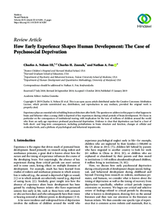
The question addressed in this paper from the Neural Plasticity journal is what happens to brain and behavior when a young child is deprived of key experiences during critical periods of brain development.
The aim of this study was to describe the experiences of the maternal role and support given in mothers with cognitive limitations who have children in placement.
In this segment from BBC Radio 4, File on 4 reports from Uganda on conditions in UK-funded orphanages where, in the worst cases, children are neglected, exploited and abused by orphanage staff, tourists, volunteers, and donors.
The current study examined longitudinal trajectories of memory and executive functioning (EF) from childhood to adolescence in the Bucharest Early Intervention Project, a randomized controlled trial of foster care for institutionally reared children in Romania.