Image
This page contains documents and other resources related to children's care in Europe. Browse resources by region, country, or category.
Displaying 1 - 10 of 3565
Juveniles in residential care systems have high rates of suicidal ideation (SI). This study aims to expand knowledge of the prevalence and stability of SI, as well its associated factors among young adult care leavers in Switzerland.
This article presents a research protocol for the first comprehensive, multi-method study examining the quality, experiences, and outcomes of residential out-of-home care for children and young people in Austria. It aims to identify factors influencing children’s well-being and development while generating evidence to improve child welfare practice, quality assurance, and policy.
This mixed-methods systematic review reports findings from 73 studies on interventions to support children and young people to return home safely after a period in care in the UK. Overall, reunification interventions had a small but meaningful positive effect on outcomes associated with successful reunification.
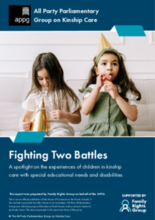
This report, from the UK All Party Parliamentary Group (APPG) on Kinship Care, shines a spotlight on the experiences of children with special educational needs and disabilities (SEND) who are raised by kinship carers. The report reveals that both the child welfare system and the SEND system were not designed with kinship families in mind.
This systematic scoping review examines programmes that integrate parenting support and financial well-being support for families with children aged 0–19 in the UK. It explores programme models, evaluation approaches, and evidence on their effectiveness in addressing child and family outcomes.
This article describes how Romania is in the final stages of closing its old orphanages, a process which began in the 1990s, when more than 100,000 children were living in such institutions.
This article examines concerns about the treatment of children in care in Ireland and argues that the State has failed to fully uphold the constitutional rights of children placed in alternative care.
This article explores how professionals in Portuguese residential care settings perceive the factors that support or hinder the development of children’s social-emotional competencies, emphasizing the importance of relationships, staff stability, and supportive working conditions. It finds that while strong relational practices and collaboration facilitate progress, gaps such as limited training, high workloads, and the absence of structured protocols remain key barriers, pointing to the need for more consistent and sustainable approaches.
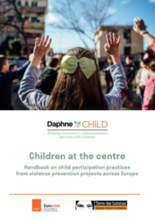
This handbook documents how 48 civil society organisations across nine European countries involve children meaningfully in violence prevention work. Produced by Eurochild and Terre des hommes as part of the EU-funded Daphne-CHILD programme, it presents a project-by-project overview of child participation practices, covering approaches such as co-design, peer education, child-led research, arts-based methods, advocacy, and digital tools.
This article highlights a major milestone in child protection reform in the Nisporeni district, where no children under the age of six are now living in residential care institutions. This achievement follows several years of coordinated efforts by UNICEF, the Moldovan government, and partners to deinstitutionalize young children and expand family-based and community care alternatives.