File
Displaying 2061 - 2070 of 4564
UNICEF and ILO published a joint report aiming to contribute to the ongoing discussions about the future of social protection for children.
This special section of the journal of Research on Social Work Practice focuses on adoption breakdown.
In this webinar presented by RISE Learning Network, Omattie Madray and Zenainda Rosales presented an extensive study recently carried out which analyzed over 100 documents and conducted over 20 interviews to gain insights on practices of organizations supporting and caring for boys affected by sexual violence in their recovery process.
The Transitioning to Family Care for Children Online Training provides an overview of the key concepts and steps that are important to a successful transition process.
In the present report, submitted pursuant to Human Rights Council resolution 37/20, the United Nations High Commissioner for Human Rights provides an overview of the legal framework and practical measures to empower children with disabilities.
The purpose of this consultancy is to assist UNICEF in drafting the Secretary General’s Report. This report provides an important opportunity for UNICEF and key partners to prominently feature the topic of children without parental care on the General Assembly agenda and highlight progress made in the areas of prevention of unnecessary separation of children from families and alternative care, including the in the last ten years since the endorsement of the Guidelines for the Alternative Care of Children.
The question addressed in this paper from the Neural Plasticity journal is what happens to brain and behavior when a young child is deprived of key experiences during critical periods of brain development.
In her report, the Special Rapporteur on the rights of persons with disabilities provides an overview of the activities undertaken in 2018 and a thematic study on disability-specific forms of deprivation of liberty, in the light of the standards set forth in the Convention on the Rights of Persons with Disabilities.
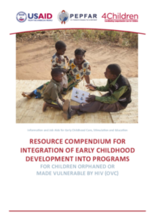
Written for USAID and PEPFAR implementing partners, with a focus on OVC practitioners, this is a user-friendly compendium of current resources, information and job aids for early childhood care, stimulation and education.
El presente folleto incluye información para preparar a los niños y niñas para que regresen a sus hogares o ingresen a servicios de atención basados en una familia sustituta.