
Image

Displaying 1071 - 1080 of 1146
This systematic review published by the Campbell Collaboration reviewed controlled experimental and quasi experimental studies in which children removed from the home for maltreatment and subsequently placed in kinship care were compared with children placed in non-kinship foster care for child welfare outcomes in the domains of well-being, permanency, or safety.
This report, issued by the United Nations High Commissioner for Refugees, examines the situation and needs of unaccompanied children who emigrate from Central America and Mexico to the United States, and offers recommendations based on those needs.

An exploratory case study design was used to identify the needs of kinship caregivers in northern British Columbia (BC).
This paper offers a broad overview of some of the main approaches to child protection used internationally. Using examples from Canada, Sweden, Belgium and the Gaza Strip, it offers policy-makers the chance to reflect on the strengths and weaknesses of different approaches, as well as how these examples might be used to inspire improvements within the Australian context.
This review synthesized the literature from 1990 to 2013 regarding the subject of grandparents raising grandchildren, particularly grandchildren with disabilities.
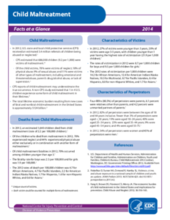
This brief factsheet from the U.S. National Center for Injury Prevention and Control of the CDC provides an overview of child maltreatment.
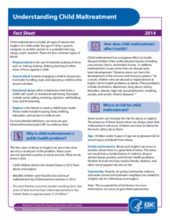
This brief factsheet from the National Center for Injury Prevention and Control presents current data on child maltreatment in the United States.
This qualitative study explored the experiences of adults who had lived in group home care as adolescents and transitioned back into the community at the end of their treatment.
This paper provides overview of the US and Canada in-care system, noting certain differences and similarities between the two systems. Estimates of the number of children in care in Canada and data on children in the US foster care systems is also provided.
This 6-minute video from the Center on the Developing Child at Harvard University explains the importance of human interaction with a caregiver to an infant’s brain development and the dangers of neglect to a child’s cognitive development, particularly the neglect that occurs in institutional settings.