
Image

Displaying 2441 - 2450 of 2545
This article is based on interviews with 19 child care policy experts including policy advocates, researchers, and funders.
This paper utilises findings from a longitudinal study of looked after children (including interviews with care leavers) to explore how the evidence from Canadian research into the significance of perceptions of self continuity for identity formation can improve our understanding of care leavers' experiences and the factors that may act as barriers to their making a smooth transition.
Foster youth in the US do not appear to be receiving many forms of help that are called for in federal law. Over one-third did not receive help they would have liked to have received. System factors play a stronger role than individual indicators of need in help receipt. Independent living services should be more widely available and better targeted.
This study examines the Parent Partner program, which employs parents with lived experience of child removal to support families in the reunification process. Findings suggest that children whose parents worked with Parent Partners were more likely to be safely reunified, indicating the model’s potential as an effective child welfare intervention.
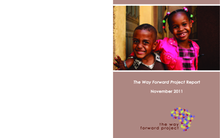
The Congressional Coalition on Adoption Institute’s The Way Forward Project brought together a group of international experts to discuss opportunities and challenges facing governmental and non-governmental organization leaders in six African nations (Ethiopia, Ghana, Kenya, Malawi, Rwanda, and Uganda) as they work to develop systems of care that serve children in and through their families.
This paper uses comparisons of child benefit packages in the European Union and Central and Eastern European and Confederation of Independent States (CEE/CIS) countries derived using model family methods.
Parental leave and early childhood education and care have gained a high profile in child and family policy fields, and both have been the subject of substantial cross-national mapping, describing and comparing their main features across a range of countries. This article provides overviews on parental leave and early childhood services in affluent countries, and reflections on this mapping.
Child care and early education policies may not only raise average achievement but may also be of special benefit for less advantaged children, in particular if programs are high quality. We test whether high quality child care is equalizing using rich longitudinal data from two comparison countries, Denmark and the United States.
A comparative analysis of child welfare systems in 10 countries identifies three broad functional orientations – child protection, family service and child development.
This study uses data from the 2005 National Household Education Survey to examine the effects of child care subsidies on the enrollment of low-income children in early childhood education programs.