Image

Displaying 11 - 20 of 784
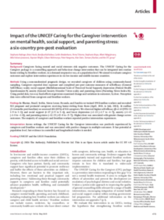
The UNICEF Caring for the Caregiver package is a counselling approach and behaviour change intervention that can be integrated into routine home-visiting by frontline workers, in a demand-responsive way, at a population level. This study aimed to evaluate caregiver outcomes and explore intervention experiences from the package in six low-income and middle-income countries.
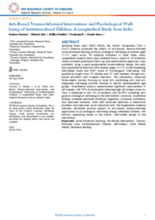
The Vanam Vasapadum initiative evaluated an arts-based, trauma-informed social-emotional learning program for children in institutional care in Tamil Nadu, finding significant improvements in self-esteem and psychological well-being over three years. Both quantitative and qualitative results highlight that creative, holistic interventions can enhance emotional regulation, resilience, and social skills among vulnerable adolescents, suggesting strong potential for broader mental health promotion.
This article examines how, years after the Covid-19 crisis, many children in India who lost one or both parents continue to struggle due to gaps in government support systems.
The article reports that the ongoing US-Israeli war in the Middle East is having a severe and long-lasting impact on children across the region, with hundreds killed and thousands injured and over a million displaced, particularly in Lebanon, Gaza
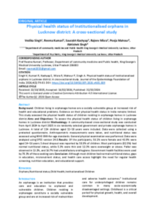
This study assessed the physical health status of children residing in orphanage homes in Lucknow district, India. It found while most had normal nutritional status, many faced challenges, including high school dropout rates, signs of micronutrient deficiencies, and poor oral hygiene.
Over the past year, the Leadership Dialogue Series, hosted by Miracle Foundation India and India Alternative Care Network (IACN), has brought together leaders from government, civil society, academia, youth, philanthropy, and the private sector to reflect on how systems can better strengthen families and prevent the unnecessary separation of children. As they conclude the 2025-26 series, the 10th edition of Leadership Dialogues will focus on a critical question: How do we know if family strengthening efforts are truly working?
This article argues that poverty is a major driver of family separation in Pakistan, forcing many parents to place their children in orphanages or care institutions not out of choice, but as a survival strategy.
This study examines how mindfulness relates to psychological well-being among adolescents in orphanages in Pakistan, with a focus on the role of self-efficacy. Findings show that higher self-efficacy strengthens the positive impact of mindfulness on well-being, highlighting the importance of both factors in supporting adolescent mental health.
This report examines the transition of young people aging out of institutional care into independent adulthood. It highlights how many care leavers face significant challenges after turning 18, including limited access to education, employment, and stable housing, as well as a lack of life skills and supportive social networks.
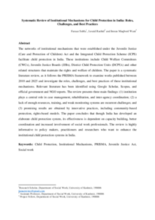
Institutional mechanisms established under India’s Juvenile Justice (Care and Protection of Children) Act and the Integrated Child Protection Scheme play a central role in safeguarding children’s rights through case management, rehabilitation, and coordination. This systematic review of literature (2010–2025) finds that while these systems are essential, they face persistent challenges such as limited resources, inadequate training, and weak monitoring, with improved outcomes linked to community-based and rights-based approaches.