Image
This page contains documents and other resources related to children's care in Asia. Browse resources by region, country, or category.
Displaying 1 - 10 of 2011
This webinar—hosted by the Transitioning Residential Care Working Group under the Transforming Children's Care Collaborative—brought together practitioners from Asia, Latin America and the Caribbean, and Eastern and Southern Africa to explore how social norms shape efforts to transition away from residential care and how they can be effectively addressed.
This randomized trial in Thailand evaluated a blended parenting programme combining in-person sessions and messaging support, finding no reduction in child maltreatment at one-month follow-up. Results suggest the need to refine programme design and target higher-risk families, as well as assess longer-term impacts to better understand effectiveness.
Child abuse and neglect in urban Vietnam are strongly associated with socio-economic hardship and family vulnerabilities, including low income, residential instability, single-parent households, low parental education, and alcohol misuse. The study underscores the need for integrated, community-based interventions that address both structural inequalities and family-level risk factors to effectively prevent child maltreatment.
This article describes how Pakistan’s heavy reliance on institutional care (such as orphanages) is both misguided and harmful, emphasizing that most children placed in these settings are not true orphans but are separated from families due to poverty and social pressures. It highlights extensive evidence that institutionalization undermines children’s emotional and developmental well-being and points to weak regulation and oversight of care facilities, which can expose children to further risks.
This UNICEF article highlights the Sri Lankan government’s endorsement of the Global Charter on Children's Care Reform.
This study of children in residential care in Pakistan finds that perceived institutional neglect is strongly linked to attachment insecurity, emotional dysregulation, and conduct problems, with attachment insecurity acting as a key mediating factor. The study highlights the importance of enhanced caregiver training, emotional support mechanisms, and the establishment of nurturing and stable environments within residential institutions to promote children’s psychological well-being and social adjustment.
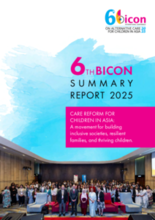
The 2025 BICON Conference Summary Report captures the outcomes of the 6th Biennial International Conference, held in Kuala Lumpur, Malaysia on 15–16 October 2025. It brings together key discussions, insights, and recommendations from across the conference, providing a clear direction for strengthening care reform and advancing inclusive, family-based systems for children.
This study explores the challenges faced by young people with disabilities in Japan after leaving residential care, finding they often struggle with adapting to new environments, managing their health, and accessing consistent support. It highlights the need for more structured, long-term support systems to help them successfully transition to independent living.
The Vanam Vasapadum initiative evaluated an arts-based, trauma-informed social-emotional learning program for children in institutional care in Tamil Nadu, finding significant improvements in self-esteem and psychological well-being over three years. Both quantitative and qualitative results highlight that creative, holistic interventions can enhance emotional regulation, resilience, and social skills among vulnerable adolescents, suggesting strong potential for broader mental health promotion.
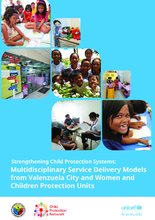
Developed to support efforts to strengthen the child protection system in the Philippines, this report documents two complementary approaches to delivering child protection services. Drawing on fieldwork, stakeholder consultations, and system analysis, the paper presents how local government-led Child Protection Centers and hospital-based Women and Children Protection Units provide integrated, child-focused, survivor-centered responses to violence against children.