
Image
This page contains documents and other resources related to children's care in Asia. Browse resources by region, country, or category.
Displaying 31 - 40 of 2011
This article notes how a pan-India study revealed that thousands of children of incarcerated parents (CoIP) are left invisible and vulnerable within India’s criminal justice system despite Supreme Court mandates intended to protect their rights and well-being.
This article examines how child protection policy is implemented at the local level in North Central Timor, highlighting existing legal frameworks, institutional arrangements, and budget allocations. It finds that while regional governments have established regulations and programs, formal child protection policies are lacking at the village level despite some related activities supporting children’s rights.
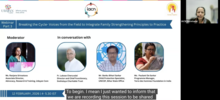
In this webinar, speakers shared the principles, practices, and innovative initiatives in family strengthening across the East and North-Eastern regions of India. Speakers reflected on evolving family vulnerabilities, the role of family-based care in care reform, and what it truly takes to embed family-strengthening principles into everyday practice.
This study compares the role of advocacy coalitions in forming child protection policies in the United States and Indonesia, looking at the problems that arise from their different political and governance systems. The findings show how important it is to improve inter-agency collaboration, strengthen local governance, and get more political support to fix the problems with child protection services
This paper introduces an Advocacy Reach Calculator developed by ChildFund International to estimate how many children and families benefit from child protection policy changes. It outlines the tool’s development and pilot testing in four countries, showing how it can support better monitoring, planning, and advocacy efforts.
This study examined differences in emotional and behavioural problems among 400 adolescent orphans in Kerala, India using the Strengths and Difficulties Questionnaire to assess how sociodemographic factors shape mental health outcomes. The findings revealed significant variations by gender, religion, type of orphanhood, length and type of institutional care, underscoring the need for tailored psychosocial interventions that reflect these differences.
This chapter, in the book Children and Family Social Work, reviews the reform of children’s care systems in Eastern Europe and Central Asia, tracing the historical reliance on large-scale residential institutions under communism and the subsequent shift toward community-based alternatives after the Soviet Union’s collapse. While institutionalization has significantly declined and community services have expanded, challenges remain in funding, workforce development, and preventing family separation while protecting children from harm.
This UNICEF article examines how violent discipline, both physical and psychological, remains widespread across Europe and Central Asia, often occurring in homes or care settings behind closed doors despite legal bans and policy commitments in man
The article highlights a deeply troubling crisis facing street-connected children in Pakistan, who remain largely invisible to authorities and are subject to widespread sexual exploitation and abuse, exacerbated by poverty, lack of safe shelter, l
In this article, Hasht-e Subh reports that the Taliban has abruptly closed private orphanages across Afghanistan, seized their assets, and transferred thousands of vulnerable children into state-run facilities under Taliban control—raising deep co