Image
This page contains documents and other resources related to children's care in Asia. Browse resources by region, country, or category.
Displaying 71 - 80 of 2061
This paper examines Uzbekistan’s statutory forms of alternative care for children deprived of parental care, including adoption, guardianship, foster care, patronage, family-type children’s homes, and residential institutions. It outlines the legal hierarchy prioritizing family-based care and highlights reforms introduced in 2024–2025 that significantly updated and differentiated the country’s care placement system.
The study evaluates three interventions to determine which combinations most effectively improve mental health and family outcomes for children in Azerbaijan who have transitioned from institutional care to family settings. Following 439 children and 305 caregivers over two years, the study aims to generate evidence on effective, scalable approaches to support successful family reintegration and inform deinstitutionalization efforts in other countries.
This paper examines how India’s adoption framework applies the best interests of the child principle, analyzing legislation, regulations, court decisions, and international standards. It argues that while adoption procedures have become more centralized, gaps in institutional capacity, eligibility rules, and statutory safeguards limit the principle’s meaningful application and contribute to informal adoptions.
This article examines how the Collective Impact methodology has supported childcare system reform in Moldova, using the Family Care First initiative in Cambodia as a comparative example to identify key lessons on governance, coordination, and local leadership. It highlights how strategic collaboration, policy advocacy, and evidence-based approaches contributed to Moldova’s commitment to ending child institutionalization by 2027, while identifying ongoing challenges in shifting stakeholder mindsets.
This qualitative case study examines the challenges and opportunities of alternative childcare services in Bangladesh, finding a growing demand for care options but significant gaps in quality and coordination. Key issues include inadequate emotional and psychosocial support, shortages of trained caregivers, weak monitoring systems, and social stigma, highlighting the need for stronger investment, capacity building, and a more child-centred approach.
This study finds that grandparenting as primary care in China is generally associated with lower overall and social-emotional development among preschool children. However, it can have a protective effect for children living with a single parent—particularly in low-income families—highlighting the need for targeted support and training for grandparent caregivers.
This article examines the legal status and consequences of concealing the ancestry of adopted children under Indonesian criminal law and Islamic law. It analyzes how such practices are addressed in statutory law and Islamic legal principles, highlighting the importance of lineage clarity, transparency, and the protection of children’s rights in adoption.
This study addresses the urgent need for family-based care for children without parental care, as emphasised by the UN General Assembly’s 2019 resolution, India’s Juvenile Justice Act 2015, and Mission Vatsalya. The primary aim is to evaluate the effectiveness of the Thrive Scale™ tool developed by Miracle Foundation India in generating measurable, data-driven decisions to plan and implement suitable interventions for family strengthening.
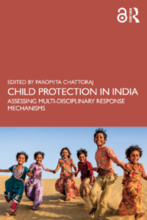
This book offers a comprehensive exploration of the institutional, legal, and social frameworks surrounding child protection in India. Anchored in a multidisciplinary approach, the book brings together insights from law, social work, psychology, education, and public policy to examine how various systems interact in addressing the issues related to protection of children from abuse, neglect, trafficking, and exploitation.
This article examines how national care systems for orphans and vulnerable children in Cambodia, Uganda, and Zambia are governed, drawing on case studies and a review of existing research. It highlights the gap between strong policy commitments and weak on-the-ground implementation, pointing to historical, political, and capacity-related factors that hinder effective care and protection.