
Image
Displaying 1 - 10 of 488
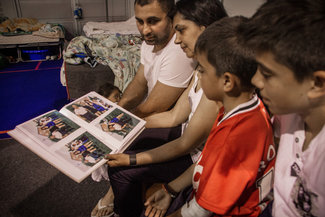
This article explores the experiences of non-Roma foster parents who raise Roma children in the Czech Republic, where Roma children persistently remain over-represented in institutional care. Drawing on the Critical Race Theory and thematic narrative analysis, the study examines how foster parents navigate issues of ethnicity, stigma and institutional bias.
This study explores why deinstitutionalisation has not always achieved its intended results in the Czech Republic by examining the experiences of practitioners involved in care reform. It finds that conflicting views—between paternalistic approaches and rights-based perspectives—create misunderstandings and challenges in implementing reforms, highlighting the need for stronger change management and collaboration among professionals.
Across Ukraine, families are living with daily uncertainty. Freezing temperatures, power cuts, and ongoing bombardment place a huge strain on parents and caregivers, as well as on frontline responders.
This article investigates the deinstitutionalisation of children with disabilities in times of armed conflict, taking the situation in Ukraine as a case study. It argues that a proper implementation of the right to independent living involves adopting a human rights-based approach that considers all the socio-economic rights of children with disabilities with due regard for the knowledge and expertise existing within families.
This chapter, in the book Children and Family Social Work, reviews the reform of children’s care systems in Eastern Europe and Central Asia, tracing the historical reliance on large-scale residential institutions under communism and the subsequent shift toward community-based alternatives after the Soviet Union’s collapse. While institutionalization has significantly declined and community services have expanded, challenges remain in funding, workforce development, and preventing family separation while protecting children from harm.
The paper provides an overview of Ukraine’s legal and policy framework related to child protection and care reform. The document reviews key national laws, strategies and regulations to assess their alignment with international child rights standards and the objectives of the reform to ensure that every child grows up in a family environment.
The multiple and extensive transformations that have occurred in Eastern Europe since the 1990s did not bypass care, bringing diverse care regimes. This chapter, in the Research Handbook on Social Care Policy, aims to explore the main trends in the development of care policies in Croatia (a post-Yugoslav country) and the Czech Republic (a Visegrád country).
This article explores the process of deinstitutionalization as a central challenge of contemporary social policy in Europe, with a special focus on Poland as an example of good practices for Ibero-American countries. The Polish case shows that implementing DI requires coordinated strategies, investment in human capital, digitalization, and multi-sectoral cooperation.
War negatively affects adults’ mental and physical health, which in turn impacts their parenting, exposing children to both direct and indirect stressors. This book examines these consequences, using evidence-based research and case studies from the Russian-Ukrainian war to highlight the importance of attachment, trauma-informed support, and interventions for families during and after conflict.
This article presents a comparative analysis of the Czech Republic and Colombia’s implementation of the United Nations Guidelines for Alternative Family Care. Based on secondary data, it identifies a shared adherence to the UN framework; a strong Czech system for alternative caregivers’ selection, training and support; a deep ethical commitment of Colombian foster families to ensure children’s well-being, despite limited resources; and the relevance of supporting parents at risk of having their children removed from their care and integrating the effects of unplanned migration into alternative care strategies.
