
Image
Displaying 231 - 240 of 488
This study, part of the Bucharest Early Intervention Project, compared the consequences of long-term high-quality foster care versus standard institution-based care which began in early childhood on cardiometabolic and immune markers assessed at the time of adolescence.
This theoretical-empirical study is based on two particular case studies of families bringing up children from institutional care in Slovakia.
This factsheet highlights the developments and challenges still ahead in Ukraine and offers key recommendations to the EU and the national government to ensure that children are cared for in family-based settings.
This factsheet highlights the developments and challenges still ahead in Romania and offers key recommendations to the EU and the national government to ensure that children are cared for in family-based settings.
This factsheet highlights the developments and challenges still ahead in Poland and offers key recommendations to the EU and the national government to ensure that children are cared for in family-based settings.

This factsheet highlights the developments and challenges still ahead in Moldova and offers key recommendations to the EU and the national government to ensure that children are cared for in family-based settings.
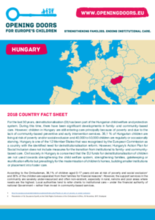
This factsheet highlights the developments and challenges still ahead in Hungary and offers key recommendations to the EU and the national government to ensure that children are cared for in family-based settings.
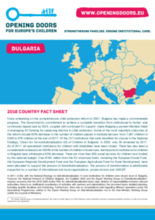
This factsheet highlights the developments and challenges still ahead in Bulgaria and offers key recommendations to the EU and the national government to ensure that children are cared for in family-based settings.
The present study addressed institutionalised children and staff members' perspectives about bullying in Residential Care settings (RCs) in five European countries (Bulgaria, France, Greece, Italy and Romania.).
This study draws upon data from the Bucharest Early Intervention Project (BEIP), a longitudinal study exploring the impact of severe psychosocial deprivation on child health and development to examine the relationship between telomere length and psychopathology.