Image
Displaying 411 - 420 of 488
This paper provides details of research into the gatekeeping system in Bulgaria for children under three and examples from recent Bulgarian and international practice. It suggests that gatekeeping could benefit from a social development orientation including activities to combat poverty and promote social inclusion through supporting community and family strengths.
This article describes the historical background and current situation of the child welfare system for children without parental care in Poland.
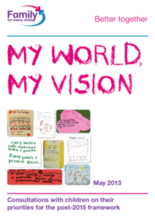
The Millennium Development Goals will come to an end in 2015 and discussions are currently taking place on what framework will replace them. Children’s participation is crucial to these discussions. Between July 2012 and March 2013, members of Family for Every Child consulted with children living in seven different countries. This report summarizes the main findings that emerged from these consultations.
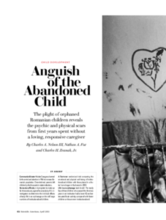
Published in Scientific American in 2013, this article describes the findings from the first-ever randomized trial comparing the emotional and physical well-being of institutionalized children with those placed in foster care in Bucharest, Romania.
This issue No. 3-4 is one in a newsletter series concerning care reform in Moldova. The magazine was produced by Partnerships for Every Child (P4EC), an NGO in Moldova, with funding from the project, “Protecting children in Moldova from family separation, violence, abuse, neglect and exploitation.”
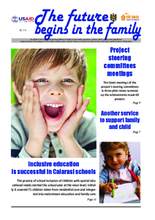
This 10-page newsletter, translated into English, is issue number two of a series produced by the “Protecting children of Moldova from family separation, violence, abuse, neglect and exploitation” project, which is implemented by Partnerships for Every Child, the Ministry of Labour, Social Protection and Family of Moldova, and the Ministry of Education of Moldova.
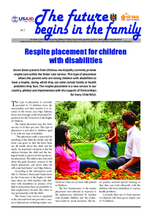
This paper discusses the challenges of reforming the child welfare and protection systems in Hungary and Romania -two countries in transition from socialism to capitalism- and the impact on children, young people, families, and professionals. The focus is on the efforts made to deinstitutionalise children from large institutions, develop local prevention services, and develop alternatives to institutional care.
This newsletter, translated into English, is the first of three issues produced by the “Protecting children of Moldova from family separation, violence, abuse, neglect and exploitation” project, which is implemented by Partnerships for Every Child, the Ministry of Labour, Social Protection and Family of Moldova, and the Ministry of Education of Moldova.

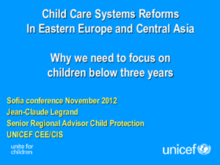
This presentation to the 2012 Sofia Conference by Jean-Claude Legrand, Senior Regional Advisor Child Protection, UNICEF CEE/CIS, highlights the situation of children in formal care, with particular concern for children with disabilities, and recommends reform and policy initiatives to improve the childcare systems in Eastern Europe and Central Asia.
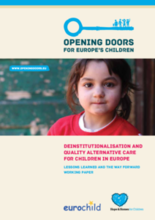
This paper aims to raise awareness on the perverse effects of institutionalisation on children and it calls for comprehensive system reforms, starting with a transition towards family and community-based care. It highlights country level lessons learnt in the European context that demonstrate how deinstitutionalisation can be achieved in practice.