
Image

Displaying 271 - 280 of 863
For this study, one hundred and twenty‐six 11–21 year olds (53 who had experience of the care system and 73 who did not) were recruited from the community and NHS. All participants had self‐harmed in the past 6 months. Participants completed an Audio Computer‐Assisted Self‐interview (ACASI) regarding their views about the support they had received, how helpful it was, and what further help they felt they needed.
In the present study, six unaccompanied asylum‐seeking minors (UASMs) were interviewed and interpretative phenomenological analysis (IPA) was used as a methodology to analyse the data.
This research aimed to construct an explanatory theory of how residential staff make sense of, and use, attachment theory in practice.
The purpose of this study was to examine the lived experiences of posttraumatic growth (PTG) in adult survivors of institutional childhood abuse in Ireland.
This report presents the findings from a study of the organisational and institutional context of statutory children’s social care (CSC) in England and its contribution to inequalities in provision.
This report presents findings from an independent analysis of the responses to a public consultation issued by the Scottish Government in September 2019, which invited views on its specific proposals for the establishment of a statutory financial redress scheme for victims / survivors of abuse in care.
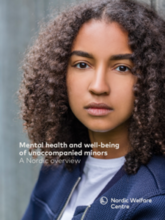
This report surveys different aspects of health of unaccompanied minors who have arrived in the Nordic region.
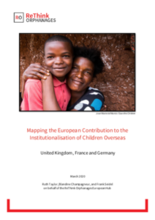
Significant anecdotal evidence suggests that other countries across Europe also make a considerable contribution to the supply chain of people, money and resources that continue to sustain and foster the orphanage industry worldwide. This report seeks to map the contribution of the three countries in Europe with the largest volunteer travel markets: The United Kingdom, Germany and France.
This article presents the findings of the qualitative study on the personal change of foster parents carried out in Lithuania, which reveals the subjective experience of informal learning of the foster parents fostering a non-relative child.
This study aims to explore how young migrants in kinship care in a Swedish suburb describe what different places mean to them and what these descriptions can tell us about their sense of belonging.