Image

Displaying 601 - 610 of 863
This report from the University of Bristol School for Poicy Studies and Coram Voice presents findings from a 2017 survey, in which 2,263 looked after children and young people from 16 local authorities in the United Kingdom completed the ‘Your Life, Your Care’ survey to determine their subjective, self-reported wellbeing.

This chapter raises questions about the use of unregulated websites and the commodification of children that seek forever families, how far adoption in the digital age will be further redefined remains to be seen.
Prepared for the Agenda 2030 for Children: End Violence Solutions Summit, held in Stockholm, Sweden, on 14-15 February 2018, this report tracks progress towards prohibition and elimination of corporal punishment of children in Pathfinding countries.

The objective of this study was to investigate whether men and women who were looked-after (in public care) or adopted as children are at increased risk of adverse psychological and social outcomes in adulthood.
On the basis of qualitative interviews with 10 children about their experiences collaborating with child welfare professionals, this study has identified ways in which professionals can facilitate children's participation.
This review analyzes and critiques the foster care system in England, offering recommendations for improving the system.
The 2017 country factsheets provide an update on the status of child protection and care reforms from 16 European countries that are the focus of Opening Doors for Europe’s Children campaign in Phase II.
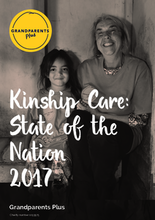
This report is based on a survey of members of the Grandparents Plus Kinship Care Support Network, which includes almost 4,000 kinship carers in the UK.
The aim of this study was to investigate 60 foster parents' acceptance, commitment and awareness of influence to their early placed foster children at 2 years, as well as to investigate the association between these three concepts and the foster children's social-emotional functioning (externalizing, internalizing, dysregulation and competence) at 2 and 3 years of age.
The article aims to uncover what hinders social workers to carry out effective work in providing social services for families whose children are in temporary custody.