Image

Displaying 651 - 660 of 863
Record rise in number of care applications has prompted England's most senior family court judge to warn of a looming “crisis”.
The present study is based on life mode interviews with social workers who started their careers in child protection services, focusing on their daily lives as newly graduated professionals.
In this study, 30 primary school aged UK adoptees without a history of institutionalisation completed an assessment of their intellectual, executive functioning and social communication abilities.
This article will discuss the impact of reforms on time limits in decision-making for children, questioning whether they achieve both good decisions for children and justice for families.
This paper presents a model of care‐leaving that incorporates developments in the political economy of health literature to show how differing welfare state arrangements shape health by mediating the distribution of economic and social resources over the life course for populations in general and for those in and leaving care specifically.
This article compares blank care order application templates used in four countries (England, Finland, Norway, and USA (California)), treating them as a vital part of the ‘institutional scripts’ that shape practice, and embody state principles of child protection.
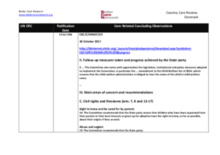
This country care review includes the care related Concluding Observations adopted by the Committee on the Rights of Persons with Disabilities and the Committee on the Right of the Child at their recent examinations of Denmark's report.
This chapter discusses findings from a qualitative study that investigated the experiences of disabled children living in out-of-home care in th UK.
This is the first controlled study of an expressive arts group intervention with unaccompanied minor asylum seeking children. The aim of the study was to examine whether such an intervention may alleviate symptoms of trauma and enhance life satisfaction and hope.
The paper draws on a mixed methods study the role and effectiveness of Independent Reviewing Officers in England.