
Image

Displaying 811 - 820 of 863
This data pack, produced by the Department for Education, aims to summarize national data about children who leave care aged 16 and over and outcomes of care leavers at age 19. The pack was also developed to help local authorities to compare their performance with others and to investigate issues such as age of leaving care and placement stability on the outcomes of care leavers.

This report presents the findings from a two-year peer research project which includes the testimony of more than 300 young people with care experience in Albania, the Czech Republic, Finland, and Poland. More than 40 care leavers from the four countries were selected and trained to play an active role in the all aspects of the projects. The interviews revealed widespread inadequacies regarding the process of leaving care, promoting the research team to draw up recommendations to address them.

The chapters in this book discuss the complexity immediately encountered when approaching the task of improving the lives of Looked After Children (LAC).
This article describes the results of a meta-analytic review aimed at providing an estimate of the prevalence of physical and emotional neglect by integrating prevalence figures from the body of research reporting on neglect. It discusses and makes recommendations on the dearth of studies investigating the prevalence of child neglect, despite evidence of its severe consequences on millions of children, and a global prevalence estimated to be above 15%.
This paper presents findings from the first-ever study of kinship care in the UK using census micro data.
This report presents findings of a study on the childhood and family backgrounds of 1,435 participants who were newly incarcerated in 2005 and 2006 in the United Kingdom. The report has a special focus on the experiences of abuse and care placement in childhood.
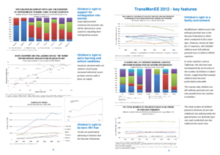
TransMonEE is a database that captures a vast range of data on social and economic issues relevant to the situation and wellbeing of children, adolescents and women in 28 countries of Central and Eastern Europe, Commonwealth of Independent States and the European Union. This document includes inter-country comparisons of data on several issues related to children’s care.
This article provides an update on a series of projects that have highlighted the issue of institutionalization of children in Europe, arguing that babies and small children aged less than 3 years old, with or without disability, should not be placed in residential care without a parent or primary caregiver.
This comprehensive manual provides an overview of child abandonment and its prevention in Europe, exploring the extent of child abandonment, possible reasons behind this phenomenon, the consequences of abandonment, and good practices in terms of prevention. For the purposes of the EU Daphne-funded project, child abandonment is defined in two ways, namely open and secret abandonment. Country specific in-depth reviews of child abandonment and its prevention are provided for 10 countries and results from an EU-wide survey analyzed.
The aim of this article is two-fold. Firstly, to present a critical discursive analysis of young people's accounts of themselves in the transition from care. Secondly, to shed light on three different ways of making the transition from care; transition through a break with the past after moving out, transition through continuing change and transition as a way of dealing with the risk of further problems in their lives.