Image

Displaying 381 - 390 of 432
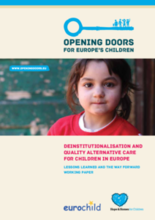
This paper aims to raise awareness on the perverse effects of institutionalisation on children and it calls for comprehensive system reforms, starting with a transition towards family and community-based care. It highlights country level lessons learnt in the European context that demonstrate how deinstitutionalisation can be achieved in practice.
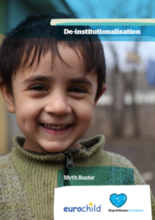
This briefing paper seeks to address key misunderstandings about de-institutionalisation. It explains what it is and what it is not and addresses key questions often asked about the need for such institutions, the role they play and the impact of this transformation and what it entails.
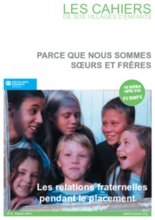
Les enfants placés ont souvent des frères et sœurs. Malgré l’importance du lien fraternel et des décisions le concernant, les recherches européennes sur les relations fraternelles sont rares et plus encore celles sur les fratries placées. Dans la plupart des pays, les données officielles disponibles renseignent sur le nombre, le sexe et l’âge des frères et sœurs dans les familles et leur statut social, mais elles ne disent rien sur les autres caractéristiques des relations fraternelles et de la situation familiale.
Apres le secteur du handicap les travaux europeens relatifs a la desinstitutionalisation portent sur le secteur de la protection de l’enfance. Aussi, la Convention Nationale des Associations de Protection de l’Enfant (CNAPE) a souhaité apporter son expertise, défendre un certain nombre de principes et présenter des axes de travail afin que l’évolution annoncée ne soit pas préjudiciable ni pour l’enfant, ni pour sa famille. La réflexion sur la désinstitutionnalisation doit être menée dans un objectif unique : offrir à chaque enfant la meilleure réponse possible au regard de sa situation et de son intérêt supérieur.

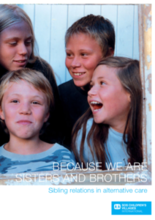
This publication by SOS Children’s Villages International brings together research findings, learning and policy recommendations about sibling relations in alternative care gathered from five different SOS Children’s Villages associations (Germany, Austria, France, Italy, and Spain).
As debates rage on austerity measures and social spending cuts, a new report reveals the extent of child poverty and child deprivation in the world’s advanced economies. Some 13 million children in the European Union (plus Norway and Iceland) lack basic items necessary for their development. Meanwhile, 30 million children – across 35 countries with developed economies – live in poverty.
This study aimed to establish the effect of brief, in-home intensive family preservation programs on prevention of out-of-home placement, family functioning, child behavior problems and social support.
This article provides an update on a series of projects that have highlighted the issue of institutionalization of children in Europe, arguing that babies and small children aged less than 3 years old, with or without disability, should not be placed in residential care without a parent or primary caregiver.
This document is a French language summary brochure of the Manual of Good Practice titled ‘Child Abandonment and its Prevention in Europe,’ specific to child abandonment in France.

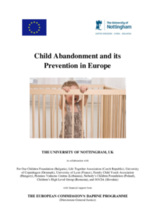
This comprehensive manual provides an overview of child abandonment and its prevention in Europe, exploring the extent of child abandonment, possible reasons behind this phenomenon, the consequences of abandonment, and good practices in terms of prevention. For the purposes of the EU Daphne-funded project, child abandonment is defined in two ways, namely open and secret abandonment. Country specific in-depth reviews of child abandonment and its prevention are provided for 10 countries and results from an EU-wide survey analyzed.