Image
This page contains documents and other resources related to children's care in Europe. Browse resources by region, country, or category.
Displaying 61 - 70 of 483
This paper reports on a small-scale, qualitative evaluation of an approach to working with children in care launched in Brighton and Hove called Me and My World. Core principles of the model are explained including continuity of relationship between social workers and children in care; a statutory review process which promotes participation of the child and young person and a recording system where social workers, IRO’s and foster carers write reports for review directly to the child.
This report explores how gender-restrictive groups are using child protection rhetoric to manufacture moral panic and mobilize against human rights, and how this strengthens the illiberal politics currently undermining democracies.
This article discusses findings from an evaluation of a pioneering early help service in North West England. This new service aimed to improve the safety and wellbeing of families (mothers and children) who were assessed as below the level of ‘high risk’ domestic violence and below the threshold for a child protection order.
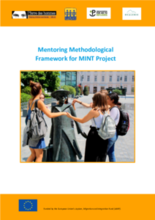
Through the MINT – Mentoring for Integration of third country national children affected by migration project, Terre des hommes and its partners aimed to empower refugee and migrant children, as well as European youth, to engage in new integration activities. This final Framework sets out guidelines drawn from existing documents and recognised good practice, as well as being informed by the experience of implementation.
This paper presents data from a unique programme evaluation of the parenting programme titled ‘Learning together, growing as a family’ applied in 14 cities in Spain and targeting families at risk of neglectful behaviour.
UNICEF Bulgaria's project, "Family for Every Child," aimed to demonstrate that viable alternatives to institutionalization exist, and that as long as a network of suitable support services is in place, deinstitutionalization is achievable. UNICEF Bulgaria commissioned this evaluation to establish whether the project had been successful
Through a diverse range of examples of how people are meeting the challenge of responding to the effects of this public health emergency, CELCIS hopes to record, reflect on, inform, and inspire others about the impact that these are having in the lives of care experienced children and young people, and all those who work and volunteer across public and voluntary services to support them.
This article reports on the use of a suite of validated instruments to measure the impact of services on children and their parents in receipt of services provided by an Irish Non-Governmental Organisation (NGO) across their seven family centres.
This article explores birth parents’ views on their needs and perceptions of support delivered by two different interventions: one offering support to individuals and the other providing a parental group.
By drawing on the experiences of parents, advocates, NGOs, and public officials, this side event invited discussion on how, through strengthening families and tools for prevention, societies can reduce the number of children being institutionalized. During the event, a panel of experts from the Republic of Moldova, South Africa, Burkina Faso, Vietnam, and the United States explored their experiences around efforts to empower parents and keep children with disabilities with their families.