Image
This page contains documents and other resources related to children's care in Europe. Browse resources by region, country, or category.
Displaying 91 - 100 of 483
Researchers are increasingly using self-report measures of physical, psychological, and sexual violence and neglect for population-based surveys. The current gold-standard measure, the 45-item ISPCAN Child Abuse Screening Tool has been used across the world. This study assesses its adequacy for measuring abuse across countries.
Qualitative research based on a multiple‐case study was designed and carried out in Spain with the aim of deepening the understanding of the individual school experiences of three children in residential care.
In this webinar, hosted by Better Care Network and SOS Children's Villages International, panelists - including careleavers who served as co-trainers in the Leaving Care project - discussed the training, building a supportive network for care leavers, and the support needed to ensure that the rights of young people in alternative care are respected and that they are prepared for an independent life.
This article summarises the Narrative Model and shows how it supports placement stability for children.
This article describes a major development in child care practice in Wales that has occurred over the past two years. The Adopting Together Service (ATS) involves a unique, innovative and multi-layered collaboration between the voluntary adoption agencies (VAAs – non-governmental charities) and regional adoption teams (statutory agencies) to secure permanence for children who wait the longest to find families.
The aim of this study was to investigate counselors’ and caregivers’ experiences with Project Support (PS) in Sweden, a program designed for families with children who have been exposed to intimate partner violence (IPV).
This research set out to capture the ways in which adaptations were made by UK local authorities in light of the COVID-19 pandemic. This report is based on the experiences of 15 local authority children’s social care (CSC) departments that volunteered to participate in the research and whose views were captured between late May and early June 2020.
Family for Every Child, as part of its How We Care initiative, has developed a series on Psychosocial support for children and families during COVID-19, which highlights different approaches taken by three of its member organizations to providing essential psychosocial support to vulnerable children and families within the context of the pandemic.
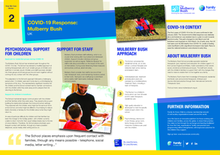
This How We Care series explores how Family for Every Child's Members are providing essential psychosocial support to vulnerable children and families within the context of the pandemic.
The authors of this study conducted a qualitative case study and obtained in-depth knowledge about the necessary professional competencies from the perspective of financiers, providers, practitioners, and participants across three cases of family and parenting support programmes in Germany and the Netherlands.