File
Displaying 1 - 10 of 4552
The Second Global Ministerial Conference to End Violence Against Children will be hosted by the Government of the Philippines, in partnership with WHO and UNICEF, in November 2026.
The objective of this course is to strengthen knowledge of interpreting and using child protection statistics in a rigorous and evidence-informed manner, thereby enhancing participants’ ability to assess programme proposals, design interventions and monitor results, ensuring that decision-making is grounded in data and oriented towards measurable improvements in child protection outcomes.
The Connect to Protect – Children & Youth at Risk Conference is an international forum dedicated to strengthening child protection and improving outcomes for vulnerable children, adolescents, and young people. Organised by IASIS NGO, the conference brings together researchers, practitioners, policymakers, and organisations working across sectors to address the most pressing challenges affecting children and youth today.
The ISPCAN Rise Up Policy Forum is a global initiative to catalyse progress in advancing child protection through a public health and system strengthening approach. It brings together governments, policymakers, researchers, and practitioners to build on momentum, develop domestic capacity, and translate into action the country pledges made at the Global Ministerial Conferences on Ending Violence Against Children.
Childlight is pleased to invite applications for its Global Data Fellow (GDF) Programme. This 12-month fellowship, held over the course of the calendar year, offers a blend of virtual and in-person learning, as well as opportunities for collaboration and professional connection.
This webinar will unpack effective multisectoral approaches to ECD for children with disabilities and the caregivers who support them, highlight initiatives and resources from partners in the field, and present scalable solutions to implementing partners and governments.
The International Classification of Alternative Care of Children (ICare) addresses a crucial need for globally accepted operational concepts, definitions and principles to ensure a standardized approach to collecting and classifying statistical data regarding alternative care of children. The ICare will be officially released on 15 July during this event.
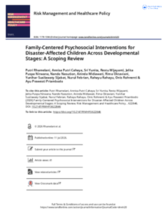
This scoping review examines family-centered psychosocial interventions that support children affected by disasters, highlighting how caregiver well-being, family functioning, and developmentally appropriate approaches contribute to children’s recovery and resilience. It finds that while interventions show promise, evidence gaps remain for certain age groups and long-term outcomes, emphasizing the need to integrate family-centered approaches into disaster mental health systems.
This scoping review examines the prevalence and impact of Adverse Childhood Experiences (ACEs) among children and adolescents living in institutional care, finding that childhood adversities are widespread and strongly linked to mental health challenges, social difficulties, and reduced quality of life. It highlights significant gaps in the research, including inconsistent definitions, limited standardized measurement tools, and the need for more longitudinal and culturally responsive studies to inform effective interventions.
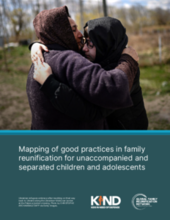
This mapping aims to highlight promising laws, policies and practices relevant to family reunification for unaccompanied and separated refugee children and other children in need of international protection. The mapping aims to raise awareness of current legal, administrative, and programmatic barriers as well as highlight a range of promising practices that enable unaccompanied and separated children to reunite with parents or other caregivers across borders.