
File
Displaying 951 - 960 of 4530
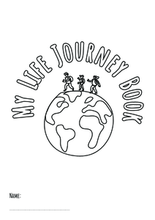
Since the start of war in Ukraine, more than 4 million people have fled, half of whom are children. As of today there is the Mylifejourneybook for these children: an activity book in which children can write their experiences of the journey, but also their memories of Ukraine and their hopes for the future. The book can be downloaded free of charge for everyone at www.lifebookforyouth.com/mylifejourneybook
The Toolkit is intended for field practitioners working with Children Associated with Armed Forces and Armed Groups (CAAFAG), who are interested in designing and implementing quality, gender-sensitive and participatory programming.
Three decades of reporting from the States Parties to the Committee on the Rights of the Child have revealed many gaps between the promise of the convention and the reality on the ground for children. This book is an article-by-article analysis of almost all substantive, organizational, and procedural provisions of the Convention on the Rights of the Child.
his study examined the relationships between COVID-related stress, mental health and professional burnout in the infant and early child mental health (IECMH) workforce and examined reflective supervision and consultation (RSC) as a potential protective factor in the context of COVID-related stress.
The Data and Analytics Section at UNICEF Headquarters developed a data collection protocol and tools for conducting a census of residential care facilities, the enumeration of children, and a survey of child well-being that can be replicated and adapted in a variety of country contexts.
This protocol for data collection on children living in residential care facilities (RCFs) aims to provide governments with clear guidance on recommended actions and steps for undertaking a census to map and enumerate such facilities and the children living in them.
The resource provides information about the care and support of lesbian, gay, bisexual, transgender and questioning children and youth.

There are a multitude of stakeholders involved in the protection, education, mental health and psychosocial care of children for children in low- and middle-income countries. This article presents how the current medical and public health models for child mental healthcare, do not adequately address the complexities of child protection and mental health. It argues for mental health professionals to: (a) recognise the role of Adverse Childhood Experiences (ACEs) in mental health morbidity; (b) adopt an alternative approach, namely that of transdisciplinarity, to enable more effective solutions to children’s psychosocial and mental health issues, through systemic reform and transformation.
This study is part of a larger initiative using an international platform to examine child maltreatment (CM) reports and child protective service (CPS) responses in various countries. The first data collection, which included a comparison between eight countries after the pandemic's first wave (March–June 2020), illustrated a worrisome picture regarding children's wellbeing. The current study presents the second wave of data across 12 regions via population data (Australia [New South Wales], Brazil, United States [California, Pennsylvania], Colombia, England, Germany, Israel, Japan, Canada [Ontario, Quebec], South Africa).
This ChildHub course aims to help adult support workers understand the key behaviours, attitudes, skills and actions that they need to consider when working with children and young people.