Image
Displaying 71 - 80 of 1640
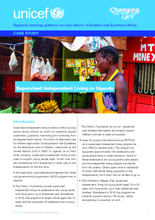
Supervised independent living involves a child or young person living without an adult but receiving regular supervision, guidance, mentoring and monitoring from an assigned adult mentor. This case study explores lessons learned from three non-governmental organisation (NGO) programmes in Uganda.
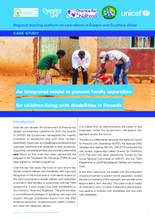
Over the past decade, Rwanda has reformed its care system to prioritize family-based care, with recent efforts focusing on supporting children with disabilities through a multi-sector, community-based approach. This short case study explains why this integrated model is important to prevent family separation, outlines the key components of this approach, and provides some lessons learnt from the pilot.
This video describes lessons learnt from the use of supervised independent living in Uganda for adolescents and young adult care leavers.
This report synthesizes learning on community-led child protection in Sierra Leone, Kenya, and India. It shows the power of communities' own agency and action on behalf of children and underscores the importance of ownership.
This article uses Nancy Fraser’s social justice framework to examine the experiences of youth leaving care in Ghana, South Africa, Uganda, and Zimbabwe, drawing on interviews with 45 care-leavers conducted by peer researchers. Findings reveal how intersecting injustices—such as stigma, exclusion, and lack of resources—undermine their transition to adulthood, underscoring the need for stronger aftercare services, recognition of diverse identities, and greater youth participation in shaping policy and support.
Adoption in Zimbabwe, while intended to provide stable families for children without parental care, often marginalizes adopted adolescents by excluding them from decisions, limiting transparency, and severing cultural ties. This study highlights the emotional distress and identity challenges this creates and calls for more inclusive, transparent, and culturally grounded adoption practices that uphold children’s rights and voices.
This document presents a comprehensive report on a pilot project in Kenya that tested the Social Cohesion for Disability Inclusion Approach as part of the Changing the Way We Care℠ initiative. The report details the implementation process, participant feedback, and measurable shifts in knowledge, attitudes, and behaviors among caregivers and community members, highlighting increased empathy, inclusion, and advocacy.
This report, based on a study across nine countries, examines how to strengthen the community-level social welfare workforce (CLSWW) as a vital but under-resourced part of national child protection systems. It calls for context-specific strategies that clearly define roles and competencies, build capacity, and align with local norms, mechanisms, and resources to enhance child protection outcomes.
This study examined the geographical location of fostered children in Kenya, identified who provides their care and the nature of mothers’ relationships with these caregivers, explored transitions and mobility within kin networks, and analyzed how location and distance influence maternal–child contact.
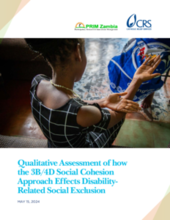
The Qualitative Assessment of How the 3B/4D Social Cohesion Approach Effects Disability-Related Social Exclusion in Zambia by Catholic Relief Services (CRS) highlights the Inclusive Family Strengthening (IFS) project's significant impact on reducing disability-related social exclusion. The project utilized introspection, intragroup and intergroup connections, and action to foster empathy, acceptance, and support for children with disabilities.