Image
Displaying 11 - 20 of 90
This is one of the resolutions adopted under the Kigali Declaration on Child Care and Protection Reform adopted on June 25, at the closure of the 2022 Commonwealth Heads of Government Meeting.
The strategy, developed with the support of UNICEF and a multisectoral Care Reform Core Team, under the leadership of the National Council for Children’s Services (NCCS), seeks to guide national steps towards prevention and family strengthening, robust alternative family care, and tracing, reintegration and transitioning from institutional care to family and community-based care for all children in need of care and protection. It sets out areas of focus for various agencies in the sector for the next ten years and calls for collaborative effort and active coordination to achieve collective impact approach.
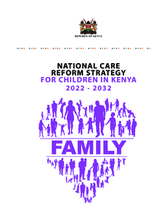
Kenya on Wednesday launched a care reform strategy to boost the rights of children, a senior government official said. Margaret Kobia, Cabinet Secretary in the Ministry of Public Service, Gender, Senior Citizens Affairs, and Special Programmes said that the strategy was developed with the support of the United Nations Children's Fund (UNICEF) and provides a roadmap to prevent the separation of children from their parents through family strengthening programs.
The Eastern and Southern Africa Regional Learning Platform hosted a webinar on 11 May 2022 examining why it is important to align care systems in development and humanitarian contexts and provides practical examples from Kenya and Uganda.
In this video Chilala Shilimi Nyendwa, Manager of the Family Preservation and Empowerment Program for ACE Zambia, addresses the following questions: social stigma facing reintegrated children; ability of families to financially support their children and how organizations might respond when families cannot; and child safety outside of institutional care.
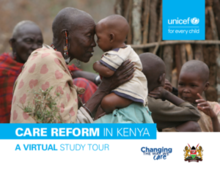
This Changing the Way We Care virtual study tour aims to provide an overview of care reform in Kenya from the comfort of your own home. Care reform relates to the care of children. It refers to efforts to improve the legal and policy frameworks, structures, services, supports and resources that determine and deliver alternative care, prevent family separation and support families to care for children well.
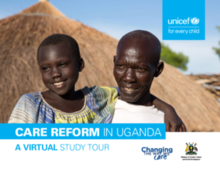
This virtual study tour aims to provide you with an overview of care reform in Uganda from the comfort of your own home. Care reform relates to the care of children.
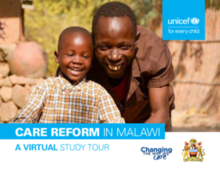
This virtual study tour aims to provide you with an overview of care reform in Malawi from the comfort of your own home. Care reform relates to the care of children. It refers to efforts to improve the legal and policy frameworks, structures, services, supports and resources that determine and deliver alternative care, prevent family separation and support families to care for children well.
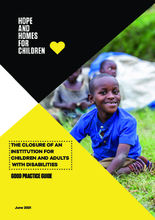
This document outlines 5 key steps that serve as an effective blueprint for a successful reintegration process of children and disabilities. These include ‘engagement’, ‘Assessment’, ‘Design & Development’, ‘Transition’, and ‘Monitoring & Evaluation’.
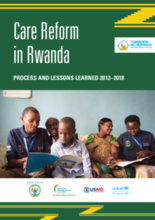
This paper documents the care reform process and presents key lessons learnt. It is based on a review of Rwandan policy and programme documents and on interviews and focus group discussions with 65 stakeholders.