Image
Displaying 101 - 110 of 132
A networking lessons learned toolkit that examines CINDI, a successful children and HIV / AIDS network in South Africa.
A study of endogenous community-based responses to the needs of children affected by HIV and AIDS, and how these might be supported in KwaZulu-Natal.

A study of HIV/AIDS education programs and direction for creating curricula in African schools.
Examines how a rights-based approach can provide a firm foundation for framing priorities and responses to children and families affected by HIV/AIDS.
This document discusses the work contributing to the area of psychosocial measurement with regard to HIV/AIDS and provides samples of surveys that can be used in measurement.
Practical guidance on dealing with young children in the context of HIV/AIDS. Focuses on the developmental needs of children affected by HIV/AIDS. Also focuses on care and treatment provision for children who are HIV-positive.
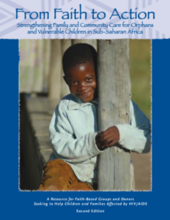
A guide for faith-based organizations working in developing countries on issues related to orphans and vulnerable children. Contains examples of successful community-based and family support care programs throughout the world that are run by faith-based groups. Discourages the use of institutional care and orphanages.
A tool to encourage donors to fund community programs that keep children in family care, rather than simply funding orphanages. Describes the many strategies being used to invest in community-based care, and contains specific program examples.
Using fieldwork data from six sites, this report addresses the need for improved delivery of the Child Support Grant in South Africa. Includes a comprehensive review of the grant components and current system of delivery. Recommended changes to the act and regulations are highlighted.
A situational analysis of policy and care surrounding children affected by HIV/AIDS in Lesotho. Includes a comprehensive, practice-oriented discussion of alternatives to residential care, placement procedures and standards of residential care.