Image
Displaying 31 - 40 of 585
The South African Early Childhood Review 2024 tracks data on the status of children under six years.
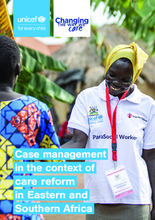
Este artigo explora o papel da avaliação e gestão de caso no contexto das reformas do sistema de cuidados alternativos. Oferece princípios transversais de boas práticas, as etapas essenciais e descreve os fatores críticos envolvidos nas práticas de avaliação e gestão de caso eficazes. Baseando-se na literatura da região, o artigo visa fornecer uma orientação abrangente aos profissionais e às partes interessadas envolvidas nos cuidados, no bem-estar e na proteção das crianças. O anexo fornece detalhes dos recursos de avaliação e gestão de caso da região da África Oriental e Austral e também em outros lugares.

Ce document explore le rôle de la gestion de cas dans le contexte des réformes de la prise en charge. Il propose des principes transversaux de bonnes pratiques, des étapes essentielles et décrit les facteurs critiques impliqués dans des pratiques efficaces de gestion de cas. S’appuyant sur la littérature de la région, ce document vise à fournir une orientation générale aux professionnels et aux acteurs impliqués dans la prise en charge, le bien-être et la protection de l’enfance. L’annexe fournit des détails sur les ressources en matière de gestion de cas dans la région de l’Afrique de l’Est et australe ainsi qu’au-delà.
This paper explores the role of case management in the context of care reforms. It offers cross-cutting principles of good practice, essential steps, and describes critical factors involved in effective case management practices. Drawing on literature from the Eastern and Southern Africa region and beyond, the paper aims to provide overarching guidance to professionals and stakeholders involved in children’s care, welfare, and protection.
The Children’s Institute (CI) is a multidisciplinary research unit located in the Faculty of Health Sciences at the University of Cape Town.
This webinar was a panel conversation hosted by the CPC Learning Network, ChildFund Alliance, the Program on Forced Migration and Health at Columbia University, and the Watchlist on Children and Armed Conflict that brought together a panel of experts to discuss the root causes leading to recruitment and involvement in activities of armed groups as well as the current context in countries such as Sudan, Colombia, Syria, Iraq, Yemen, and more.
This study, conducted in Mthatha in South Africa's Eastern Cape province, sought to describe Xhosa cultural attitudes in relation to adoption.
This webinar explored the importance of working across sectors to enable effective care reforms. Speakers focused in particular on work with social protection and education sectors, drawing on examples from Kenya, South Africa, Uganda and Rwanda.
This is a qualitative research study to gather primary data to examine the high demand for foster care services in South Africa and the impact on the country's social work services.
This qualitative exploratory-descriptive study outlines alternative approaches to psychosocial support for Orphans and Vulnerable Children in four municipalities of Vhembe district in Limpopo Province, South Africa, in the form of community-based interventions.