Image
This page contains documents and other resources related to children's care in Africa. Browse resources by region, country, or category. Resources related particularly to North Africa can also be found on the Middle East and North Africa page.
Displaying 571 - 580 of 597
This paper describes a qualitative research study conducted in three villages in Malawi. It explores community mobilization and kinship care, as well as striking discrepancies between the perceptions of adults and children regarding care and support. The paper advocates for increased child decision-making, childcare protection policy, and support networks for orphaned children.
This paper provides a guideline for the implementation of reunification and reintegration programs for agencies providing institutional care for orphans. It outlines the different strategies and activities an organization in Ethiopia used to transition from institutional care to community-based childcare projects.
This paper presents a study in Uganda on the effects of NGO interventions, and focuses on coping strategies in child-headed households (CHHs) and on community support systems.
Brief overview of successes, challenges, threats and programmatic best practices in addressing the needs of children affected by AIDS.
Guidelines and criteria for establishing and monitoring alternative care arrangements including emergency transit booth care (ETBC), foster care, and independent living for separated Liberian refugee children in Sierra Leone.
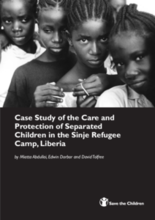
This paper outlines the response of Save the Children to the civil war outbreak in Liberia. Using the concept of child participation, the organization was able to address the needs of the children, which included family tracing and reunification, child protection and education.
This study, commissioned by UNICEF, examines formal fostering policy and practice from the point of view of the Rwandan government and fostering agencies, and explores the perceptions of fostering of children, foster parents, local authorities and other members of local communities.

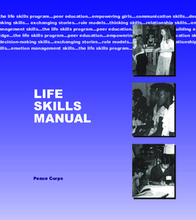
A comprehensive guide to training young people on the development of life skills, such as communication, decision-making, and relationships.
Overviews the causes and consequences of the orphan crisis in Africa and analyzes current social protection responses. Suggests good practices in social protection of orphans and vulnerable children.
Outlines national efforts to disarm, demobilize, and reintegrate former child soldiers with respect to specific political contexts. Includes lessons learned, future challenges, and recommendations.