Image
This page contains documents and other resources related to children's care in Africa. Browse resources by region, country, or category. Resources related particularly to North Africa can also be found on the Middle East and North Africa page.
Displaying 2201 - 2210 of 2666
This paper is a culmination of various studies carried out by the authors and other researchers and seeks to specifically interrogate factors in the family system in Kenya, which contributes to children leaving homes to live on the streets.
This mapping process was commissioned by the Ministry of Gender, Labour and Social Development in order to facilitate the transitioning of Uganda’s approach to child protection from a disjointed, issue-based and project-oriented approach to a more system-oriented approach in order to respond effectively to the multi-dimensional and complex child protection needs of all children in the country.
This is an impact evaluation of New Generation, a three-year project comprised of two components: 1) A VSLA intervention involving the establishment of Village Savings and Loan Associations (VSLAs) and the provision of entrepreneurs
This qualitative study explored how household size influenced the extent to which the basic needs of orphans and vulnerable children were met through the Livelihood Empowerment Against Poverty (LEAP) program in Ghana.

Using data from three rounds of the Young Lives longitudinal survey conducted in 2002, 2006, and 2009 in Ethiopia, this paper investigates whether the death of a parent during middle childhood has different effects on a child’s schooling and psychosocial outcomes when compared with death during adolescence.
Cash transfers to households are becoming an increasingly common policy instrument for reducing poverty in some countries of sub-Saharan Africa. This Briefing Note describes a simple ex-ante ‘microsimulation’ tool to determine whether launching a cash transfer programme will have an affordable impact on poverty.
This new study by Parenting in Africa Network (PAN) was conducted in three regions in Kenya (Nairobi, Mombasa and Busia), involving primary care givers of children age 0-8, children participating in Early Childhood Development and Education centers, and stakeholders and professionals involved in skillful parenting and early childhood development.
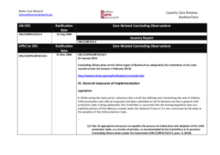
Care related Concluding Observations adopted by the Committee on the Rights of the Child on the initial report of Burkina Faso under the Optional Protocol to the Convention on the Rights of the Child on the sale of children, child prostitution and child pornography.
This study aims to determine the prevalence of maltreatment experienced by institutionalized children prior to their admission to Charitable Children's Institutions (orphanages) in western Kenya, and to describe their socio-demographic characteristics, reasons for admission, and the factors associated with prior experiences of maltreatment.
This study aims to determine the prevalence of maltreatment experienced by institutionalized children prior to their admission to Charitable Children's Institutions (orphanages) in western Kenya, and to describe their socio-demographic characteris