Image
Displaying 1031 - 1040 of 1146
In this article, the author addresses the topic of child neglect, or allegations thereof, as it relates to children and families in the Child Welfare System in the United States.
The present study employed Interpretative Phenomenological Analysis (IPA) to explore the experiences and meaning of motherhood among teen mothers in foster care in the United States.
In this comment, published in the Houston Law Review, the author, Destinee Roman describes and assesses the practice of “re-homing” adopted children.
The child welfare system was created to care for abused and neglected children. But too often, teenagers are landing in the system because they simply aren’t getting along with their parents. This paper traces Casey’s efforts to learn from communities that are preventing teens from landing in the system by helping families while the teen remains at home. A survey of the states, interviews with experts, secondary research and visits to several communities show common elements of successful programs.The paper presents information on related laws and policies, funding sources and programs for families while including the infrastructure and services needed to support such initiatives.
This study examines the outcomes for children in the U.S. foster care system who have been placed into care due to parental death and parental incarceration.
This study examines the influence of a subset of adverse childhood experiences (ACEs), placement instability, and childhood disability in uniquely predicting mental health outcomes among racially diverse foster care alumni from a private foster care agency in the US.
The case study, which accompanies the Global Study on Sexual Exploitation of Children in Travel and Tourism, tells the story of Kate, a woman from the US who was sexually exploited as a child.
This resource guide offers a fairly comprehensive guide to engaging with the Aboriginal community on Prince Edward Island, Canada. It includes a history of the use of residential schools for Aboriginal children, as well as a description of the widespread removal of Aboriginal children from their families and communities for adoption placement in the 1960s through the 1980s.
This fact sheet describes the rights of native children and families under the Indian Child Welfare Act (ICWA) in the United States.
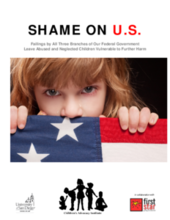
This study, produced by the Children’s Advocacy Institute at the San Diego School of Law, examines the activities of the federal government of the United States in regards to enacting and enforcing child welfare laws and ensuring that individual states are complying with minimum federal standards for child protection.