Image

Displaying 821 - 830 of 1091
Meant to highlight the maxim that every child deserves the best that we all have to give; this book provides a review of the progress made since The UN Convention on the Rights of the Child. It contains reports from 21 countries on the status of the rights of the child. The countries are: Australia, Canada, Croatia, Denmark, France, Germany, Greece, India, Iran, Japan, Portugal, Romania, Scotland, Serbia, Solomon Islands, Spain, the Netherlands, the UK, the USA, Uzbekistan and Venezuela. There are no reports from Africa.
This booklet is based on a recent internal desk review of Save the Children’s and partners’ work against physical and humiliating punishment of children, commissioned by Save the Children Sweden. It aims to present best practices, to show what methods have worked around the world, and to spread knowledge about results achieved and lessons learned when it comes to law reform and positive discipline.

This article presents an overview of the Polish system of foster welfare, its regulations by law and directions for further transformation.
A group of activists who were formerly raised in Romania's communist-era orphanages have created an association called Federeii. The group is pushing Romanian authorities to recognize and apologize for a variety of abuses committed against an estimated 500,000 children in the country's orphanages that existed before the end of the Cold War. The abuse and neglect, including physical and sexual abuse, are discussed in the article.
Published jointly with UNICEF, this new BCN Working Paper focuses on the role of gatekeeping in strengthening family-based care and reforming alternative care systems. This Working Paper reviews different approaches to gatekeeping in five countries--Brazil, Bulgaria, Indonesia, Moldova, and Rwanda--to consider what has and has not worked, to analyze lessons learned from practice, and to reflect on the implications for improving policy and programs in this area.
The Bucharest Early Intervention Project (BEIP) examined the outcomes for children who were originally placed in institutions; these children were randomized into two groups and followed longitudinally, with some being moved into foster care and others remaining in institutional care. This study reports on the brain electrical activity (electroencephalogram, or “EEG”) of 12-year-old children in this study, in order to examine the impact of movement to foster care after early psychological deprivation as a result of institutionalization.
This study discusses a variance in results in eliminating use of large-scale residential institutions for children across the CEE/CIS region.
This country care review includes the care-related Concluding Observations adopted by the Committee on the Rights of Persons with Disabilities.
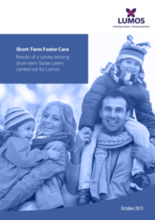
This study from Lumos provides an analysis of a survey administered to temporary foster carers in June 2015 in seven regions of the Czech Republic to address negative perceptions of foster carers and to determine whether public criticisms were founded.
This presentation was given by Beth Bradford at the ISPCAN European Conference in September 2015.