Image
Displaying 181 - 190 of 488
This chapter from Care of the State: Relationships, Kinship and the State in Children’s Homes in Late Socialist Hungary looks at child protection in Hungary from the 1950s to the 1980s, arguing that the organisational structures of state welfare bolstered parent-child ties yet restricted sibling relations.
This introductory chapter presents the conceptual framework for the book 'Care of the State: Relationships, Kinship and the State in Children’s Homes in Late Socialist Hungary.'
Care of the State blends archival, oral history, interview and ethnographic data to study the changing relationships and kinship ties of children who lived in state residential care in socialist Hungary.
This article presents the content concerning foster care as the tasks of the district government: the types of foster families, legal and organizational aspects of this form of care and the essence of the organization of foster care at county level are discussed.
This report describes key trends in migrations in the region, detailing information about the number of people on the move, demography (age, sex, country of origin, etc), behavioral patterns, and routes in use - with a focus on children, particularly unaccompanied children.
This ISS study of the child protection system as it particularly relates to alternative care was commissioned by UNICEF Ukraine. This report contains an overview of the child protection and alternative care system in Ukraine based on the process of a desk review and a 10 day fact finding mission in Ukraine in February 2020 undertaken by a team of experts from International Social Service (ISS).
This article presents a study conducted amongst young adults between the ages of 19–35. The aim was to determine the relationship between the information about foster care families and the attitude of young adults towards them.
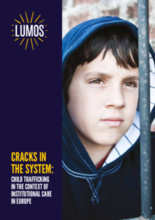
Cracks in the System is a new report from Lumos that is the first of its kind to systematically explore the links between institutional care and child trafficking in Europe.
FICE Israel decided to initiate a short survey to document and share information about the way different countries handled their policies and practices in residential care facilities during that period. This report presents findings and some conclusions from this primary survey.

This child-led research initiative was conducted under the umbrella of World Vision’s DEAR project (Development Education and Awareness Raising) and the Sustainable Development Agenda 2030. The study explores explore SDG 16.2, the goal that focuses on the issue of ‘abuse, exploitation, trafficking, and all forms of violence against and torture of children’.