
Image
Displaying 271 - 280 of 488
The current study from the Infant Mental Health Journal addressed whether two institution‐wide interventions in St. Petersburg, Russian Federation, that increased caregiver sensitivity (Training Only: TO) or both caregiver sensitivity and consistency (Training plus Structural Changes: T+SC) promoted better socioemotional and cognitive development than did a No Intervention (NoI) institution during the first year of life for children who were placed soon after birth.
The paper aims at contributing to the knowledge and understanding of growing up transnationally and ‘doing transnational family’ between China and Hungary. It has a special focus on mobile childhoods in transnational families and links specific childcare-related phenomena with the process of the integration of second generation migrants.
The authors of this article have started to conduct a qualitative research intending to determine, if and to which extent, children left behind are vulnerable to human trafficking.
This report, in the Moldovan langauge, presents the findings of an assessment workshop aimed at informing action planning to address priority needs identified in alternative care for children in Moldova.
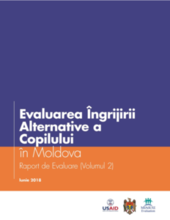
This report, in the Moldovan lanugage, presents the findings of an assessment workshop aimed at informing action planning to address priority needs identified in alternative care for children in Moldova.

This report presents the findings of an assessment workshop aimed at informing action planning to address priority needs identified in alternative care for children.
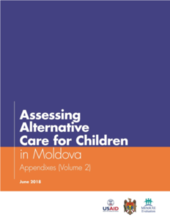
This report presents the findings of an assessment workshop aimed at informing action planning to address priority needs identified in alternative care for children in Moldova.

This study from the Bucharest Early Intervention Project (BEIP) examines the brain electrical activity of children and young people who have been institutionalized.
This talk, given by Dr Charles Nelson, focuses on two strands of work that reflect very different types of adversity: (1) the effects of early, profound psychosocial deprivation (including a review of the most recent findings from the Bucharest Early Intervention Project, a randomized controlled trial of foster care as an intervention for early institutionalization in Romania) and (2) the effects of growing up in a low resource urban center where children are exposed to a large number of both biological (e.g., malnutrition) and psychosocial (maltreatment) stressors (including a review of recent findings from a large study taking place in Dhaka, Bangladesh).
This study examined the extent to which professional foster families fulfil their tasks to reintegrate families, what attitudes professional foster families assume towards the idea of reintegration, and to what extent and how professional foster families support a child separated from his or her family and parents in the process of reintegration.