Image
Displaying 281 - 290 of 488
This study examined care leavers' own safety net and how they negotiate independent living, aimed at understanding strategies used to negotiate independent living through the lenses of social capital and social networks.
The paper aims to analyze the situation of children of Romanian migrants left at home in the care of a parent or other guardian (with or without legal forms).
Prepared for the Agenda 2030 for Children: End Violence Solutions Summit, held in Stockholm, Sweden, on 14-15 February 2018, this report tracks progress towards prohibition and elimination of corporal punishment of children in Pathfinding countries.

This study uses nationally representative data collected in 2011–2012 in Moldova (N = 1601) and Georgia (N = 1193) to investigate how children’s health associates with five transnational characteristics: migrant and return-migrant household types, parental migration and parental divorce, maternal and/or paternal migration and caregiver’s identity, the duration of migration, and remittances.
This article reports the findings of a multi-country study of medical professionals' perceptions and evaluations of children in three Eastern European countries (Romania, Bulgaria, Moldova).
The 2017 country factsheets provide an update on the status of child protection and care reforms from 16 European countries that are the focus of Opening Doors for Europe’s Children campaign in Phase II.
The Bucharest Early Intervention Project sought to examine the effects of foster care as an alternative to institutional care for abandoned infants in Romanian institutions.
The 2018 Annual Social Report presents an analysis of the general characteristics of the policies of the health, labor and social protection system as a whole.

This article focuses on the study of current transformation processes occurring in Ukraine in the provision of social services to various groups of children, in particular orphan children and children deprived of parental care.
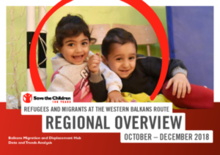
Data and Trend Analysis (DATA) Refugees and Migrants at the Western Balkans Route Regional Overview, covering period October - December 2018, describes key trends in migrations in the region, detailing information about the number of people on the move, demography (age, sex, country of origin, etc), behavioral patterns, and routes in use - with a focus on children, particularly unaccompanied children. Data in this report includes key trends in Bulgaria, North Macedonia, Serbia, Albania, Montenegro, Bosnia and Herzegovina, and Croatia.