
Image
Displaying 301 - 310 of 488
This study explores the childhood experiences and transitions to adulthood of 39 Romanian care leavers and adoptees, born around 1989 - 1990.
The objective of this essay is to determine how substitute child care in the Czech Republic has changed in the last ten years.
This study examined facial emotion recognition in 12-year-olds in a longitudinally followed sample of children with and without exposure to early life psychosocial deprivation (institutional care).
This study examined visual recognition memory and executive functioning (spatial working memory, spatial planning, rule learning, and attention shifting) in 12-year-olds who participated in the Bucharest Early Intervention Project, a randomized controlled trial of foster care for institutionally reared children.
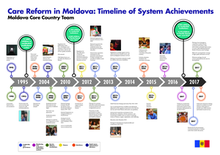
This infographic provides a historical timeline of the alternative care reform process in Moldova, marking key achievements in the establishment of policies, guidelines, procedures, and programs to improve the quality of care and protection for children without adequate family care.
This article utilizes data from the Bucharest Early Intervention Project to examine the neural indices of cognitive control and visual attention biases in children who have been institutionalized in order to understand how they influence the emergence of psychopathology in children with experience in institutional care.
This article studies the causal factors behind the major overhaul of Russia’s system for children in substitute care that has been taking place since the late 2000’s.
This report presents the findings from a secondary analysis of data from a comprehensive intervention in three baby homes in St. Petersburg, Russian Federation. The analysis examined whether caregiver-child interaction quality, number of caregiver transitions, and group size mediated the impact of intervention on children's attachment behaviors and physical growth.
This study provides a background on the historical, cultural, and social circumstances in Ukraine as it relates to the continued institutionalization of children in the country, despite efforts for reform.
This chapter of Child Maltreatment in Residential Care describes the history of child care institutions in the Russian Federation and the legislative changes implemented to improve the situation of children living in residential care settings.