Image

Displaying 61 - 70 of 1678
This report from the UK Children’s Commissioner, Dame Rachel de Souza, reviews progress and challenges in children’s social care since she began her term in 2021. It highlights persistent failures to uphold children’s rights and presents a vision for transformative reform centered on those rights.
The article argues that the system of children’s residential care in the UK is failing to meet the needs of young people, pointing to persistent evidence that many children do worse in residential homes than in alternative arrangements.
This report examines the challenges faced by local authorities in providing cost-effective, high-quality residential care for looked-after children in England, where numbers have risen to 83,630 as of March 2024.
This BBC article covers a National Audit Office (NAO) report showing that the cost of residential care for vulnerable children in England has nearly doubled in five years to £3.1bn, with councils spending an average of £318,400 pe
This study investigated how Finnish, Taiwanese, and U.S. children conceptualized and experienced care.
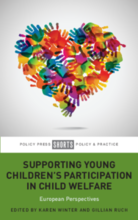
This Policy and Practice Short has emerged from an Erasmus+ Key Action 2 project funded by the European Union (EU). The project has become known as the PANDA project, an acronym drawn from the words participation and collaboration for action, and its focus is on promoting the participation rights of young children, aged 12 and under in child welfare and child protection.
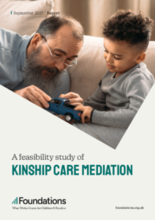
Many children in kinship care face trauma, poverty, and strained family relationships, yet their carers often lack adequate support. This feasibility study of Family Solutions’ mediation and positive parenting intervention in South Hampshire, U.K. highlights promising approaches to strengthen communication, reduce conflict, and improve outcomes for kinship families.
This article examines the rise of independent foster care agencies (IFAs) in Sweden, which have introduced a market-based model into a system once managed solely by child welfare authorities. Drawing on national data and social worker perspectives, it explores the benefits, costs, and controversies of IFAs, including concerns about profit-making in foster care.
This news article explores how a new demographic study reveals that the likelihood of Finnish children experiencing out-of-home care at least once during childhood has doubled—rising to an estimated 6% in 2020, compared to about 3% in 1993—largely driven by an increase in residential care placements.
This study explored wellbeing among Swedish adolescents with and without out-of-home care experience, using cluster analysis of 10 wellbeing indicators. It found two distinct groups—one with higher wellbeing and one with lower wellbeing—with girls, unemployed youth, and those with care experience more likely to fall into the reduced wellbeing cluster.