
Image

Displaying 851 - 860 of 1091
This background paper was developed as part of a regional study which gathered relevant data and information on family support and alternative care in the eleven Member States of the Council of the Baltic Sea States (CBSS).
Government representatives, experts and professionals from the Baltic Sea Region including Denmark, Estonia, Finland, Germany, Iceland, Latvia, Lithuania, Norway, Poland, the Russian Federation, Sweden and wider Europe gathered at a two-day expert meeting in Tallinn, Estonia and, together, endorsed a set of recommendations and action plan on alternative care and family support on 6 May 2015.
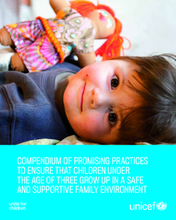
This Compendium is a compilation of the most encouraging initiatives in the area of prevention of child abandonment and relinquishment that have been implemented and tested in the CEE/CIS region.
In this paper, Lumos reviews Bulgaria’s national strategy on deinstitutionalisation, adopted in 2010, and provides recommendations for ensuring the rights of children in the process.
This report is a product of a three-year investigation by Disability Rights International (DRI) into the abuses experienced by children - both with and without disabilities - in large-scale institutions, psychiatric facilities, and boarding schools in Ukraine, of whom there are nearly 100,000, according to the report.
This article reports on a preliminary exploration of fostering across 11 European countries, reflecting different care and education traditions.
This paper, presented at the XVI April International Academic Conference on Economic and Social Development in Moscow on 8 April 2015, outlines a research project analyzing ongoing foster care reform in Russia in the context of the country’s new family policies.
In this UNICEF blog post, the author, Benjamin Perks, describes the many detrimental effects of institutionalization on young children and infants. The author highlights the 2012 Call to Action to eradicate placement of children under 3 in large scale institutions in Central Asia and Central and Eastern Europe and the advances made since then in reducing the numbers of children in institutions in the region.
This one-page presentation outlines the research questions, data, methods, results, literature review, discussion and implications of a study that looked at the effects of a child’s relationship to head of household, age, and orphan status on the severity of discipline they receive in Ghana, Iraq, Costa Rica, Vietnam,and Ukraine.

A recent study from the Bucharest Early Intervention Project has revealed that children who were placed in institutional care have an increased risk of demonstrating behaviors associated with autism, such as impaired social communication, according to the article.