Image
Displaying 201 - 210 of 488
In this chapter of Reforming Child Welfare in the Post-Soviet Space, the authors analyse how children in foster care in Russia perceive their experiences in foster families through the use of biographies.
The authors of this chapter from Reforming Child Welfare in the Post-Soviet Space introduce the ongoing child welfare reforms in Russia and consider the international and national context, as well as the main drivers of these reforms and their current results.
Целью является исследование особенностей правового регулирования договорной опеки (попечительства) над несовершеннолетними детьми в современной России.
The paper aims to make a systematic analysis of the literature that addresses the relationship between dance and multiple intelligences in order to identify the main theoretical aspects that underpin the design and implementation of educational interventions for institutionalised children to learn dance.
The presented analyses aim at depicting social discourse concerning the process of care leaving.
The aim of this paper is to indicate threats and possibilities as regards the functioning of the foster care system and the process of adult care leavers’ gaining independence.
This report presents the findings of the 2019-2020 assessment conducted within the Pilot assessment of residential healthcare facilities for children and development of recommendations for reform in five baby homes of Dnipropetrovsk, Poltava and Kherson regions of Ukraine. In addition to the findings from the assessment of baby homes, the report presents results from the region assessments regarding needs in the medical rehabilitation, paediatric palliative care, and social services for children aged 0-6 years and their families.
This report presents the opinions of foster parents in Poland on their cooperation with teachers.
The study is reflecting on the nature and features of social work with families with children, attempting to discuss social work as assistance and apprehension and to detect whether there is any causal link between the efficiency of social work and the narrative approach and the “unstoried”, “faceless” condition of the families. The authors argue that professional attitude aimed at providing child protection support is not possible without knowing the story of families with children.
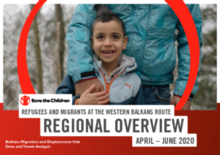
Data and Trend Analysis (DATA) Refugees and Migrants at the Western Balkans Route Regional Overview, covering period April – June 2020, describes key trends in migrations in the region, detailing information about the number of people on the move, demography (age, sex, country of origin, etc), behavioral patterns, and routes in use - with a focus on children, particularly unaccompanied children.