Image
This page contains documents and other resources related to children's care in Europe. Browse resources by region, country, or category.
Displaying 1821 - 1830 of 3596
Given that research identifies parental experiences of shame and humiliation in the child protection process, this article reports on a qualitative study that investigated how and why parents experienced such emotions within the English system.
In this article, the authors present findings from a follow‐up assessment from the Bucharest Early Intervention Project (BEIP) - the first longitudinal study to investigate the neurodevelopment of institutionalized infants randomized to a foster care (FCG) intervention versus care as usual (CAUG)- of brain electrical activity as indexed by resting EEG at age 16 years.
This podcast episode describes what self-harm is and how social workers can support young people and carers who are self-harming.
The aim of this study was to ask youth themselves how they experience the impact of traumas prior to living in a foster family.
This study tests whether an expansion of the Danish aftercare scheme in 2001 affects later outcomes of foster care alumni.
In a sample of 136 Romanian children from the Bucharest Early Intervention Project (BEIP), who were exposed to early psychosocial deprivation in the form of institutional care, the authors of this study examined caregiver-reported and observer-rated signs of disinhibited social engagement disorder (DSED).
"Up to 40 new areas will benefit from £15 million to expand promising innovative approaches to keeping families safely together," says this news release from the UK Department for Education.
The general objective of this assignment is to evaluate the advocacy approach of the Opening Doors for Europe’s Children Campaign Phase II and to provide recommendation for improving the efficiency and the effectiveness of future Campaigns.
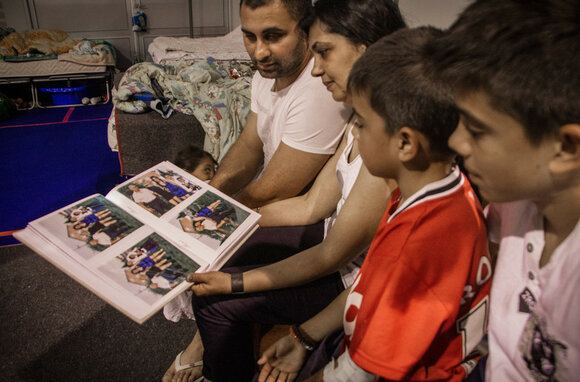
This paper considers the importance of material objects for looked after and adopted children integrated as part of life story work practices.
This paper asks how state parental responsibility towards unaccompanied minors is given meaning, and with what consequences, for both frontline workers and unaccompanied minors alike?