File

Displaying 1271 - 1280 of 4554
This study utilizes narrative and quantitative synthesis to review the scientific evidence on the associations between growing up in SOS villages and child development in various domains. Results showed developmental delays of SOS children compared with their peers in families. Compared to children in typical institutions SOS children do better on mental health but worse on physical growth. The preliminary evidence suggests that SOS Children’s Villages should move away from institutional arrangements to family care.
Este documento ofrece guía en conducir un mapeo comunitario, una etapa en la creación de un sistema para atender a los niños y a las familias vulnerables.

This document provides guidance on how to conduct a community mapping, a step in building a system to care for vulnerable children and families.
By taking this course, you will be able to prioritise issues in children’s development and define the changes you want to see in parents, make decisions about how to deliver a programme, and start to develop strategies and content for your parenting programme.
This course is a resource for parents or those who work with parents of young children to support them to provide brain-building experiences and nurturing care.
This workshop draws upon content from the Nurturing Care Framework, the Science of Early Child Development and the Beginning of Life film, to walk participants through why investing in early childhood is so important, including scientific and economic evidence.
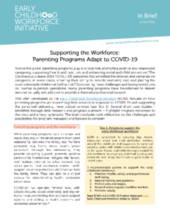
This brief, developed by the Early Childhood Workforce Initiative (ECWI), highlights common approaches parenting programs are using to continue engaging with families during the COVID-19 pandemic, including transitioning to deliver services virtually and adapting to provide enhanced psychosocial support.
This policy brief has been developed to serve as a guidance to practitioners while developing any practice on leaving care.
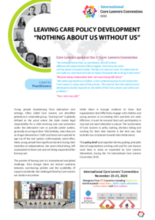
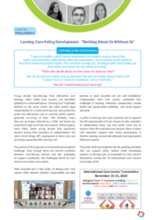
This policy brief has been developed to serve as a guidance to policy makers while developing any policy on leaving care.