
Displaying 1901 - 1910 of 4560
Family Week is an opportunity for the Family Alliance to come together, celebrate, connect, learn and reflect on joint actions. Family Week will explore both achievements and challenges in connection with the theme of children’s rights, through a dynamic series of online events and sharing of members’ news, updates, and campaigns.
Save the Children and War Child Holland are working together to look at the value of participatory approaches using creative methods to ensure community engagement and ownership within the field of community-level child protection in humanitarian and development contexts.
On November 20 and 21 Member States of the UN General Assembly participated in a High-level meeting on the occasion of the thirtieth anniversary of the adoption of the Convention on the Rights of the Child. During the general debate, number of delegates made reference to the theme of the 2019 UNGA Resolution in the Rights of the Child which focuses on children without parental care, the Anniversary of the Guidelines on the Alternative Care of Children, and work in support of children without parental care.
The aim of this study was to comprehend the magnitude of the situation of children deprived of liberty, its possible justifications and root causes, as well as conditions of detention and their harmful impact on the health and development of children.
The Convention on the Rights of the Child was adopted by the UN General Assembly on 20 November 1989. In the lead-up to the Convention’s 30th birthday, a series of events will be organized in celebration.
SOS Children’s Villages is commissioning a literature review in order to collect evidence and data about the pros and cons of residential care as a form of alternative care service for children, and how it complements other services in meeting the needs of children who have temporarily or permanently lost parental care.
To mark the occasion of the 30th anniversary of the Convention on the Rights on the Child (CRC), a three-day event was held at the UN in Geneva, Switzerland. During the Child Protection session, Becky Smith of Save the Children gave this presentation on Children Without Parental Care.
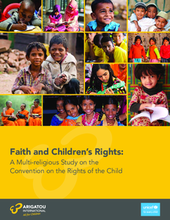
This study examines the Convention on the Rights of the Child (CRC) from the perspective of seven major religions, identifies the important role played by religious communities in advancing the rights and well-being of children over the past 30 years, seeks to identify the common values shared among different religions and the CRC and promotes continued action by religious communities to further implement the CRC in the future.
On 18 November 2019, a workshop led by International Social Service Switzerland and Child Rights Connect was held in Geneva to mark the 30th anniversary of the Convention on the Rights on the Child (CRC), the 10th anniversary of the UN Guidelines on the Alternative Care of Children, and the 5th anniversary of Optional Protocol on the CRC on a communications procedure.


This bite-sized, 7-day sprint will demonstrate what great evidence-based policy looks like and how it can transform the lives of children in care.