Image

Displaying 41 - 50 of 1664
This article examines the growing number of orphaned and vulnerable children (OVC) in Ethiopia entering institutional care or adoption and argues that effective care requires a strong theoretical and evidence-based foundation. It proposes attachment theory and research as a guiding framework to inform policy and practice, helping decision-makers assess, plan, and evaluate alternative care arrangements to better support children’s short- and long-term development.
A 14-year-old orphan, Saabirin Saylaan, was murdered by Hodan Mohamud Diiriye, the woman caring for her, after enduring months of severe abuse, prompting national outrage and protests in Galkayo.
This article argues that visiting orphanages in Kenya during holidays or as part of voluntourism, while seemingly charitable, can actually harm children by perpetuating a system that values short‑term attention over stable, family‑based care and s
This article reports how the Tanzanian government has committed to strengthening alternative care services and the management of children’s homes nationwide to ensure they meet required standards and better support child welfare and protection.
This blog, from Hope and Homes for Children, argues that the new Netflix documentary Masaka Kids: A Rhythm Within—produced with the involvement of Harry and Meghan and set in a Ugandan orphanage—presents a superficially heartwarming story that risks reinforcing harmful perceptions about institutional care at a time when global leaders, including the UK, are advocating for family-based care and ending orphanages.
This video highlights the rise of a locally led movement in Ethiopia, where Christian leaders and organizations are transforming child welfare practices following the end of intercountry adoption. It showcases the impact of the CAFO-supported DEBO Alliance as churches and advocates embrace domestic adoption and best practices to bring hope and lasting care to vulnerable children and families.

This evaluation of Save the Children Finland’s Child-Sensitive Social Protection (CSSP) programme (2022–2025) found that it improved access to social protection, strengthened government systems, and supported better parenting practices across six countries in Africa and Asia. The programme showed strong results—especially through its parenting component, which improved caregiver engagement and child development outcomes—while highlighting the need for greater government ownership to sustain long-term impact.
A strong social service workforce (SSW) is the backbone of effective child protection systems. Across Eastern and Southern Africa, social service workers play a critical role in preventing and responding to violence, abuse, neglect, and exploitation of children. Yet, the workforce remains underfunded and understaffed, limiting its ability to deliver essential services. To address this gap, UNICEF Eastern and Southern Africa Regional Office (ESARO) has developed this Synthesis Report , providing a detailed guide to developing an investment case, drawing on lessons from Kenya and Zambia.
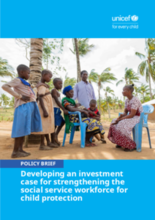
A strong social service workforce (SSW) is the backbone of effective child protection systems. Across Eastern and Southern Africa, social service workers play a critical role in preventing and responding to violence, abuse, neglect, and exploitation of children. Yet, the workforce remains underfunded and understaffed, limiting its ability to deliver essential services. To address this gap, UNICEF Eastern and Southern Africa Regional Office (ESARO) has developed this Policy Brief summarizing the rationale and approach for building an investment case for strengthening the SSW.
This book explores the challenges facing orphans and vulnerable children in Zimbabwe within the broader context of the Global South, highlighting how poverty, inequality, HIV/AIDS, and economic instability deepen children’s vulnerability. Drawing on Ubuntu philosophy, neoliberalism, and African Renaissance perspectives, it underscores the importance of community-led, culturally sensitive, and African-driven approaches to inform policy and practice supporting OVCs.