Image

Displaying 51 - 60 of 1664
This case study describes how ACE Zambia transitioned from providing residential care in Zambia to pioneering family-based care, including foster care, and supporting other residential care service providers to transition.
This review compares child protection systems in Indonesia and Ethiopia using UNICEF’s Child Protection System Strengthening framework. Both countries have established solid legal frameworks and coordination mechanisms, but progress toward system maturity remains slow due to gaps in enforcement, accountability, and support services, with Indonesia showing stronger development in workforce and data systems.
Cambiar la Forma en que Cuidamos (CTWWC, por sus siglas en inglés) es una iniciativa global que promueve un cuidado familiar seguro y afectuoso para los niños.
The Kenyan government has announced a plan to gradually reintegrate about 44,000 children currently living in private orphanages and children’s homes back to their families by 2032, under its 10‑year National Care Reform Strategy.
These SOPs aim to strengthen the effectiveness and well-being of Kenya’s child protection practitioners by promoting accountability, continuous learning, and reflective practice. By prioritizing practitioners’ psychosocial health and standardizing supportive supervision across the State Department for Children Services, the guidance seeks to improve service quality, reduce burnout, and enhance outcomes for vulnerable children.
This package of materials encompasses a comprehensive costing framework for scaling two key care reform models implemented by the Changing the Way We Care initiative in Kenya—Kafaalah and Case Management for Reintegration.
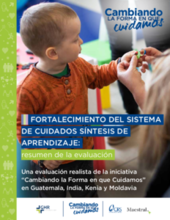
Changing the Way We Care’s “Care System Strengthening Learning Synthesis: Evaluation Summary” distills lessons from care reform efforts in four countries, examining how change happened across laws, workforce, financing, monitoring, and services. It finds that evidence-based advocacy, strong government ownership, collaboration, and capacity-building were central to driving and sustaining reform across diverse contexts.

This webinar showcased the learning from Strengthening the Social Service Workforce for Family-Based Care, a two-year project implemented by the Global Social Service Workforce Alliance, with technical support from Child Frontiers, under a grant f
This study examines strategies for reintegrating street children in Harare, Zimbabwe, into their families, highlighting the root causes of homelessness and the need for psychosocial support, counselling, family conferences, and community engagement. It emphasizes innovative, evidence-based approaches to ensure effective family reintegration and informs policymakers, social development officers, and researchers addressing child homelessness.